
The Imilchil Festival
The “Idoud n’ Sidi Hmad Oulmaghni” or Imilchil Moussem, also known as the Marriage Festival, is a prominent annual event held in the High Atlas Mountains of central Morocco, specifically in the Imilchil region of Midelt province. This festival combines authentic Amazigh (Berber) traditions with popular celebrations. Held every September, the Imilchil Marriage Festival commemorates a legend glorifying eternal love and serves as an annual occasion for a collective wedding ceremony.
The origins of this festival are tied to a moving local legend about a young man from the Ait Ibrahim tribe who fell in love with a girl from the Ait Azza tribe. However, the unfriendly relationship between the two tribes prevented the couple from marrying. Heartbroken by the refusal of their parents and tribal elders (Amghar) to approve their union, the two lovers cried so much that their tears formed the twin lakes, “Isli” (the groom) and “Tislit” (the bride).
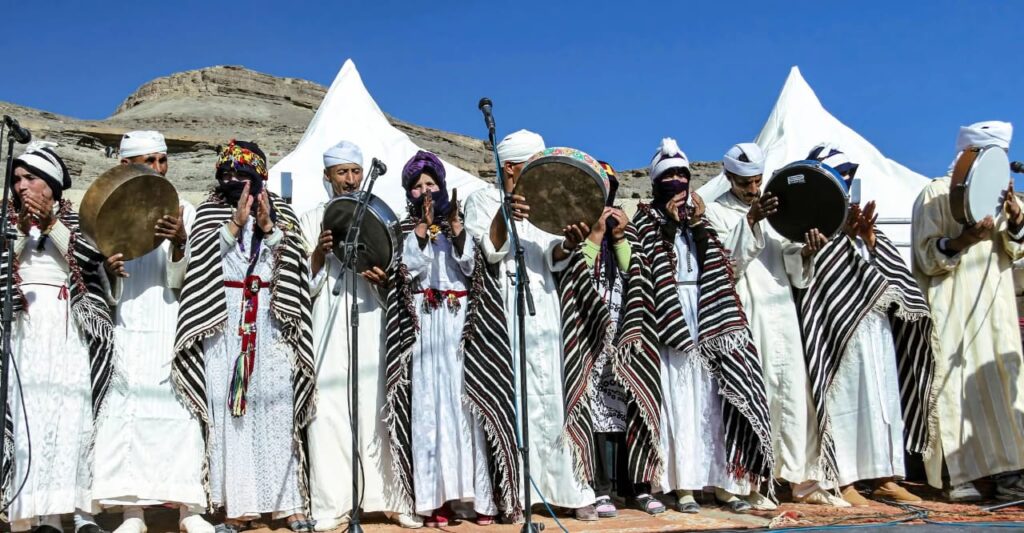
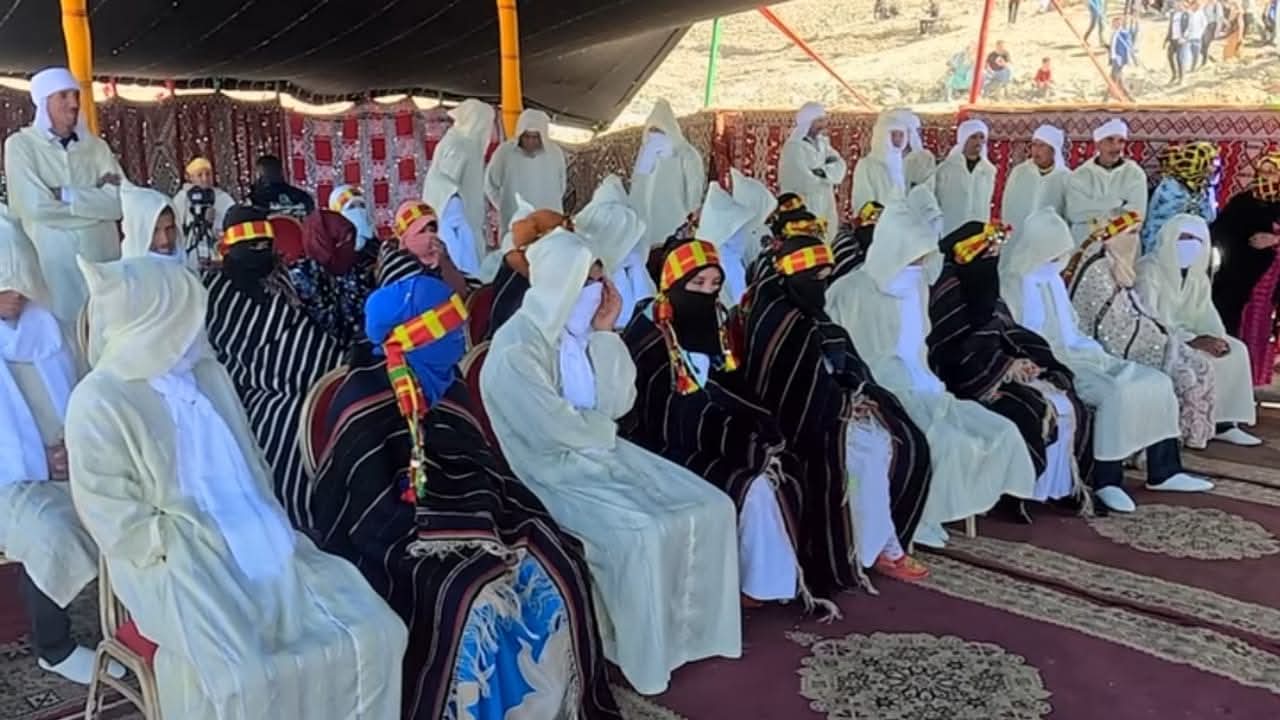
The Imilchil Festival is famous for the collective marriage that is officially recorded during its events. Dozens of young couples from the Ait Hadidou tribes and neighboring villages gather to have their marriages formally recognized. These ceremonies take place inside a large tent where the couples sit in their distinctive traditional clothing. The women wear the “Handira,” a woolen cape woven with colorful lines that vary according to tribal affiliation, and adorn themselves with traditional silver jewelry.
Before the marriage contracts are officially documented by notaries and family judges, betrothal rituals take place between the families. After the marriage contracts are finalized, celebrations erupt with traditional Amazigh songs and folk dances, such as the Ahidous dance. Every year, a large number of people from the High Atlas tribes, as well as many local and foreign tourists, flock to this festival. They come to experience one of Morocco’s most legendary socio-cultural events, which takes place in the area surrounding the shrine of the holy man Sidi Hmad Oulmaghni.