
Amazigh Culture
Harmony, Heritage, and Celebration The Amazigh people, also known as Berbers, are the indigenous inhabitants of North Africa, with their presence extending across Morocco, Algeria, Tunisia, Libya, Mali, Niger, and other countries. Their culture is considered one of the richest and oldest in the Mediterranean region, distinguished by the diversity of their languages (Amazigh dialects), music, clothing, oral traditions, and social customs.
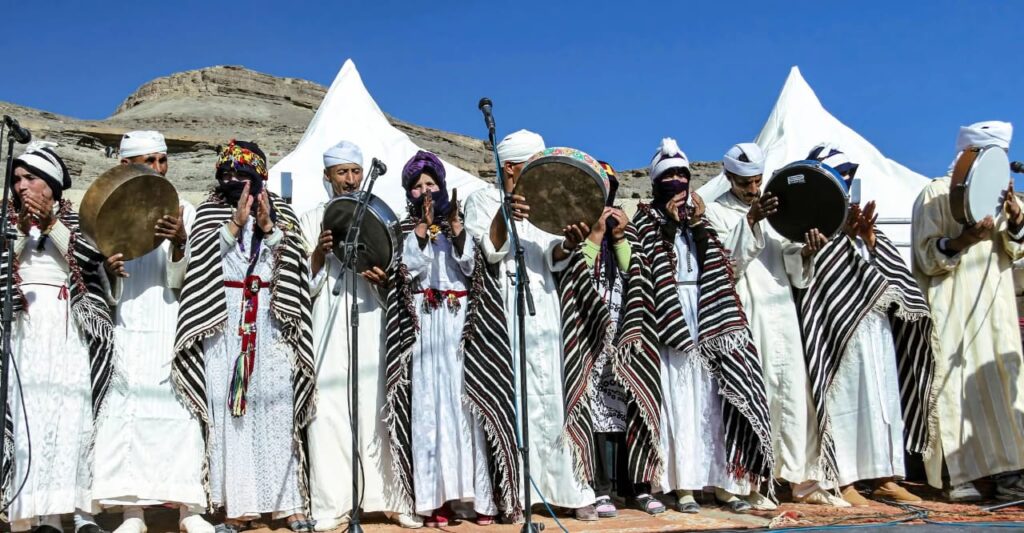
Ahidous: A Symbol of Amazigh Music and Unity
Ahidous is one of the most prominent collective arts that combines music and dance among the Amazigh people, and it is particularly famous among the tribes of the Middle and High Atlas in Morocco. It is not merely a performance art, but a ritual that expresses the spirit of the community, and it is intrinsically connected to nature, poetry, and the spiritual dimension.
Structure and Performance:
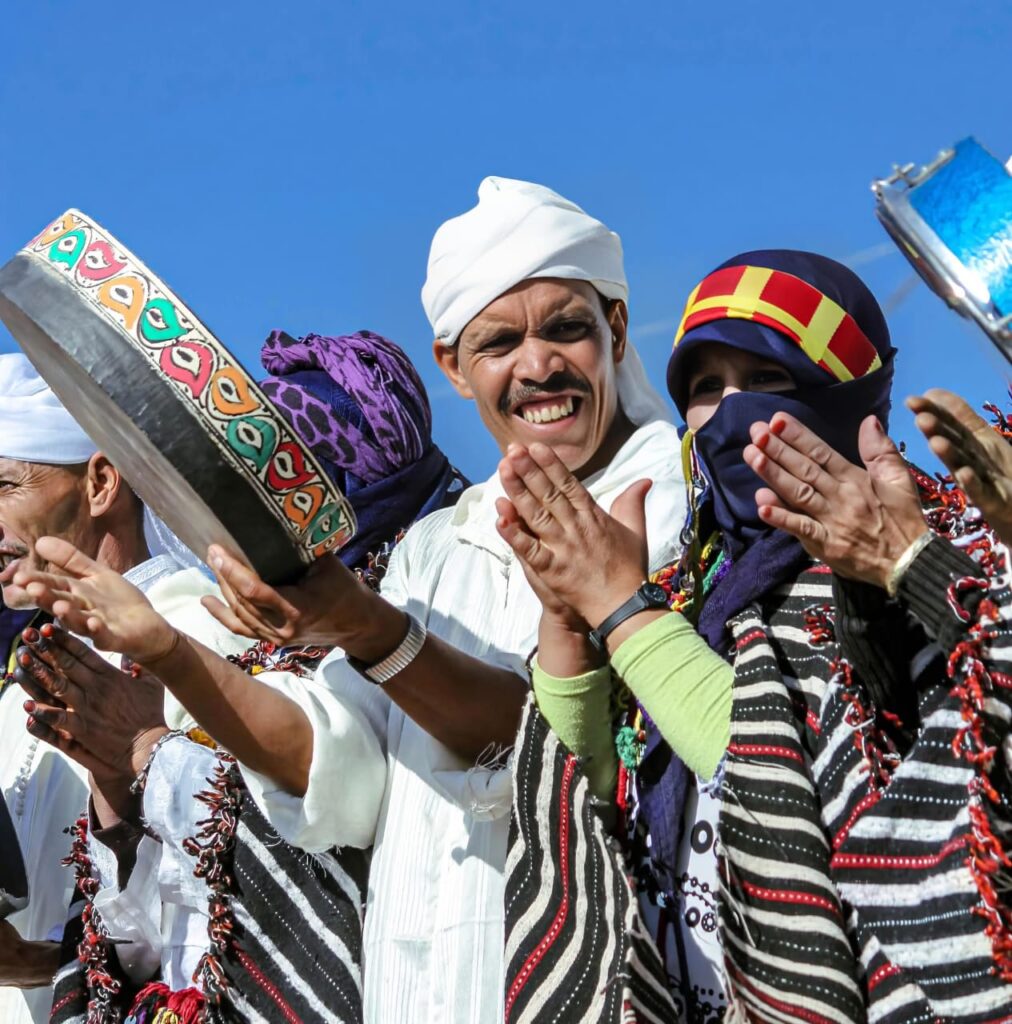
The art of Ahidous brings men and women together in a semi-circular formation, symbolizing unity, equality, and harmony. The dancers move in synchronized rhythmic steps, with their shoulders and hands swaying as they recite poetic verses known as ‘Izelan,’ which are often improvised and brimming with feelings of love, wisdom, and courage, drawing inspiration from nature. The ‘bendir’ (a large frame drum) sets the rhythm, while the voices of the participants rise and fall in perfect synchrony, creating an atmosphere that combines serenity with exuberant joy.
Cultural Importance:
Ahidous plays the role of a social link, being performed at weddings, harvest festivals, and tribal gatherings. It embodies the philosophy of solidarity among the Amazigh, where individuals move as a single entity, each being part of a larger rhythm, perfectly reflecting the harmony sought by the community.