
Gnawa music in El Khemlia
There are many who come to visit Merzouga in order to have good sand baths. But those who hear about the House of Gnawa, they can’t help but move quickly, from hospital tourism to spiritual velvet tourism, in which Gnawa music plays the main role.
In Dar Gnawa and elsewhere, Hammad Mahjoubi and his friends are seeking to create exceptional activities for the benefit of international visitors, from Morocco, or from the world.
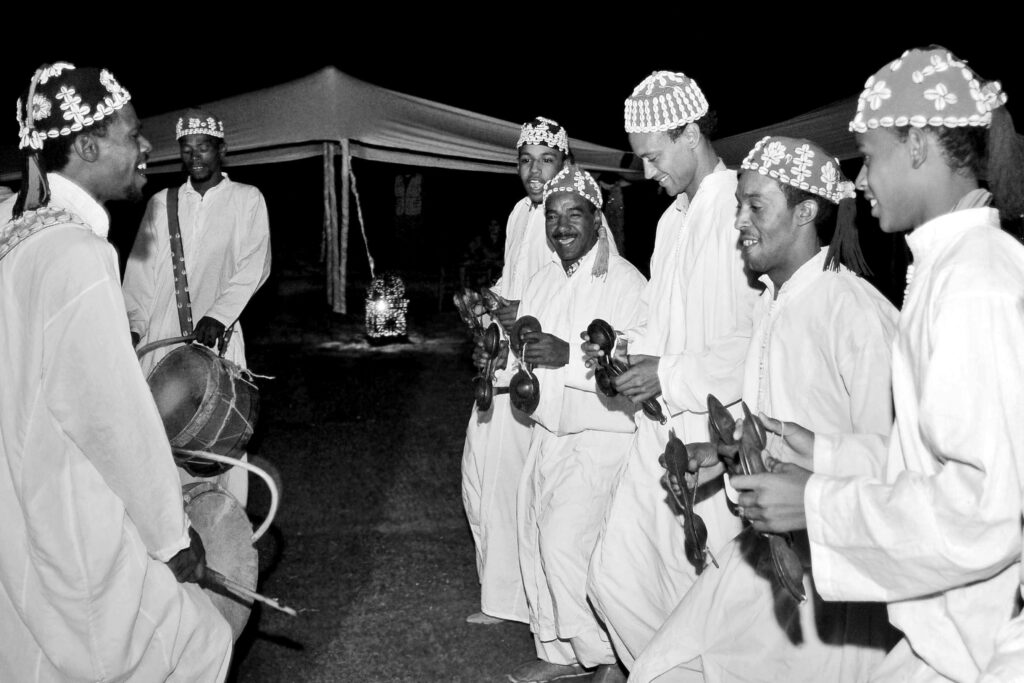
As soon as the noisy Gnawa show begins, the audience is offered cups of local herbal tea, sometimes with a bowl of hazelnuts and almonds, the owner of a white turban walks around the visitors in clothes smelling of African perfumes. By this act they tell you, implicitly, that the rhythms of Gnawa music, its round and acrobatic dances, are sweetened only with local tea.
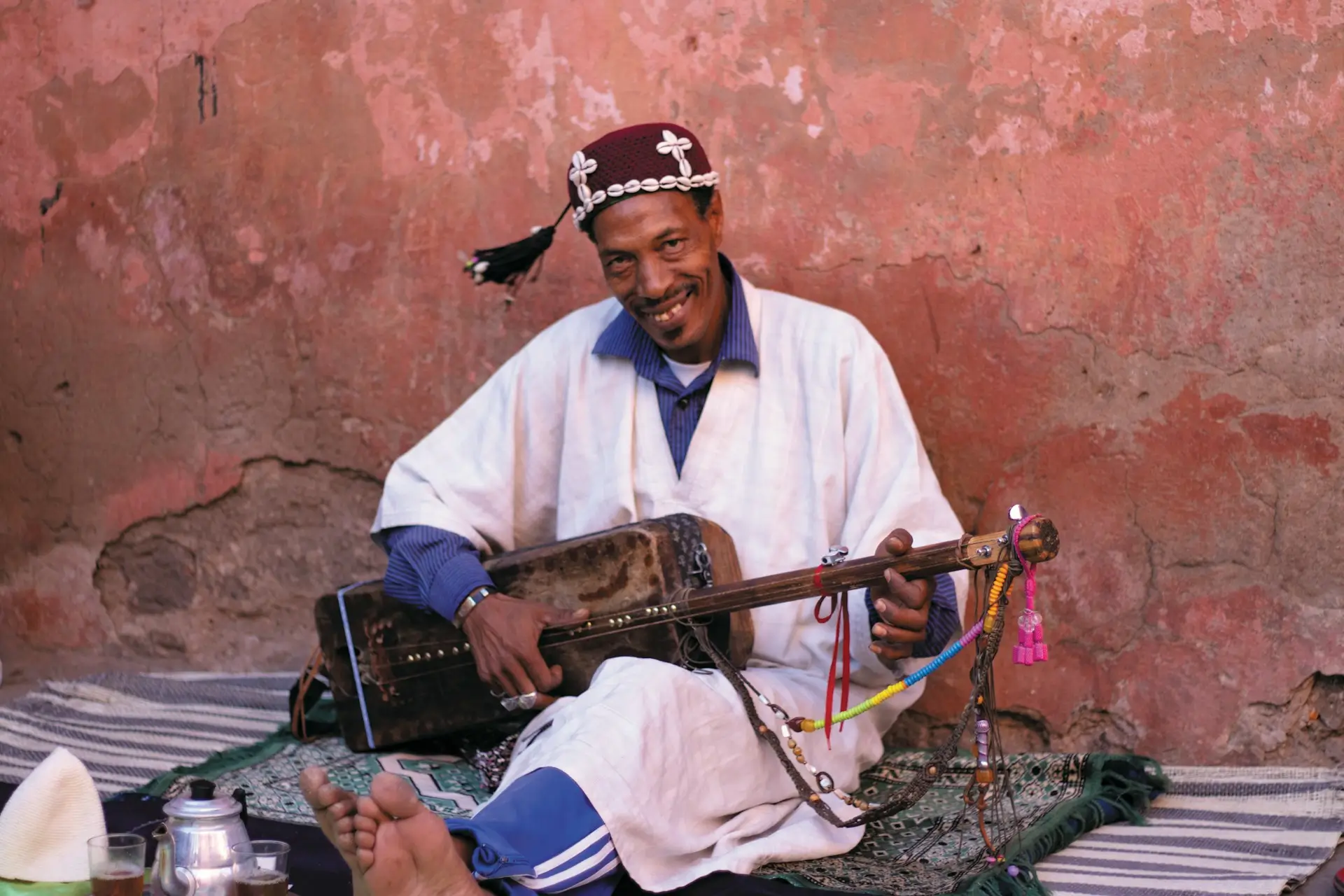
The Origins of Gnaoua Music
Gnawa or Gnaoua music’s roots reach back to sub-Saharan Africa, eventually making their way to North Africa through migrations and trade routes. The people from these regions were able to preserve their balanced traditions by reviving their spiritual rituals, which included traditional clothing and songs set to the most beautiful, ancient African melodies. Gnaoua music has been influenced by Amazigh and Arab cultures over the years, becoming one of the most important components of Moroccan artistic heritage. It is also known to its fans as the music of freedom, due to its dances reflecting a desire to break free from the chains of slavery. In fact, many accounts suggest that the metallic rhythm produced by the QRAQEB is inspired by the clanging of the chains and shackles that bound slaves in ancient times.